Chapter 4 of 6 · KPP01 / KPP Gabungan · JPJ Malaysia · English
4. Driving in Various Conditions
4. Driving in Various Conditions
Chapter summary: Different driving environments require adjustments to speed, distance and driving style. This chapter covers urban roads, rural roads, tunnels, expressways, night driving and rain/fog/floods — with special attention to motorcyclists and pedestrians.
Chapter summary: Different driving environments require adjustments to speed, distance and driving style. This chapter covers urban roads, rural roads, tunnels, expressways, night driving and rain/fog/floods — with special attention to motorcyclists and pedestrians.
1. Driving in Various Conditions — Basic Principles
【Indonesia】Basic Principles
When road, weather or traffic conditions change, the defensive driver adjusts three things: speed, following distance and driving style. In every environment, the PMMMB and MPKGA principles from Chapter 3 still apply. The golden rule: adjust your speed so that you can always stop within the distance you can see to be clear.
When road, weather or traffic conditions change, the defensive driver adjusts three things: speed, following distance and driving style. In every environment, the PMMMB and MPKGA principles from Chapter 3 still apply. The golden rule: adjust your speed so that you can always stop within the distance you can see to be clear.
Golden rules for all conditions
Golden rules for all conditions
- Stay within legal speed limits — and reduce below the limit when conditions require it.
Stay within legal speed limits — and reduce below the limit when conditions require it.
- 2-second rule (dry, good weather): stay at least 2 seconds behind the vehicle ahead.
2-second rule (dry, good weather): stay at least 2 seconds behind the vehicle ahead.
- 4-second rule (wet, dark, poor visibility): double the gap.
4-second rule (wet, dark, poor visibility): double the gap.
- Keep headlights on in rain, fog and tunnels.
Keep headlights on in rain, fog and tunnels.
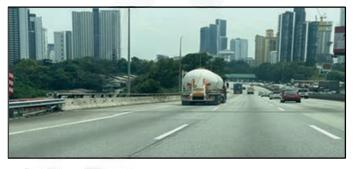
- Look 10–15 seconds ahead (one city block / 400 m on expressways).
Look 10–15 seconds ahead (one city block / 400 m on expressways).
📌 Core principle — adapt speed, distance and style to the conditions.
📌 Core principle — adapt speed, distance and style to the conditions.
2. Driving in Urban Areas
【Indonesia】Driving in Urban Areas
Urban driving means high traffic density, frequent junctions, traffic lights, pedestrians and short stopping distances.
Urban driving means high traffic density, frequent junctions, traffic lights, pedestrians and short stopping distances.
2.1 Be able to control the vehicle well so you don't interrupt smooth traffic flow.
2.1 Be able to control the vehicle well so you don't interrupt smooth traffic flow.
2.2 Plan your route before you start, and stay in the correct lane early (do not cut across lanes at the last minute).
2.2 Plan your route before you start, and stay in the correct lane early (do not cut across lanes at the last minute).
2.3 Control your emotions to avoid actions that endanger other road users (no tailgating, no honking in anger, no road bullying).
2.3 Control your emotions to avoid actions that endanger other road users (no tailgating, no honking in anger, no road bullying).
2.4 Before turning or changing lanes, ensure safety by practising the CITO routine — Check mirrors → Indicate → Turn head / blind-spot check → Overtake / move smoothly.
2.4 Before turning or changing lanes, ensure safety by practising the CITO routine — Check mirrors → Indicate → Turn head / blind-spot check → Overtake / move smoothly.
2.5 Watch out for buses stopping, vehicles pulling out of parking, delivery vans and e-hailing drivers stopping abruptly.
2.5 Watch out for buses stopping, vehicles pulling out of parking, delivery vans and e-hailing drivers stopping abruptly.
2.6 Obey traffic signals and give priority to pedestrians and cyclists.
2.6 Obey traffic signals and give priority to pedestrians and cyclists.
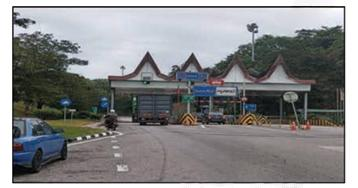
2.7 Slow the vehicle and make sure you are in the correct lane when approaching a toll plaza.
2.7 Slow the vehicle and make sure you are in the correct lane when approaching a toll plaza.
💡 Exam tip: In built-up (urban) areas the default speed limit is 50 km/h unless signs indicate otherwise. School zones are typically 30 km/h.
📌 Vehicle control, emotional control, CITO routine before lane changes, traffic signals and toll plazas.
📌 Vehicle control, emotional control, CITO routine before lane changes, traffic signals and toll plazas.
🔒
🔒 Rest of this chapter is locked
Upgrade to Pro to unlock all sub-chapters, plus all 6 chapters / 55+ sub-chapters
7 chapters locked
4.3Driving in Rural AreasPro Only
4.4Around MotorcyclistsPro Only
4.5Driving in TunnelsPro Only
4.6Around PedestriansPro Only
4.7Driving on ExpresswaysPro Only
4.8Night DrivingPro Only
4.9Adverse WeatherPro Only