VEHICLE COMPONENTS REQUIRING ROUTINE MAINTENANCE
Before driving, the driver is responsible for ensuring every component of the vehicle is in a safe, roadworthy condition. Poor maintenance is a major cause of breakdowns and accidents. This chapter covers the key components on both motorcycles and motor cars that must be checked regularly.
Chapter Contents
- 5.1 Components Requiring Maintenance (Overview)
- 5.2 Motorcycle Maintenance — Fuel, Engine Oil, Tyres, Drive System, Brakes, Battery, Clutch, Lights, Horn, Mirrors
- 5.3 Motor Car Maintenance — Fuel/Power, Fluids, Tyres, Brakes, Steering, Suspension, Battery, Lights, Wipers & Exhaust
COMPONENTS THAT MUST BE MAINTAINED
Under Section 21 of the Road Transport Act 1987 and JPJ's vehicle inspection rules, every vehicle on Malaysian roads must be kept in a safe and serviceable condition. Drivers must perform a pre-drive check (check-list pemeriksaan sebelum memandu) and must follow the manufacturer's scheduled maintenance (typically every 5,000–10,000 km or every 6 months for engine oil changes, depending on the model).
Key principle of KPP01: "A vehicle that is not properly maintained is a hazard to its driver and to everyone else on the road."
1. MOTORCYCLE MAINTENANCE CHECKLIST
Motorcycles have fewer components than cars but they are directly exposed to weather and wear, and any mechanical failure can lead to a fall or a serious crash. The following items must be checked before every ride and serviced on schedule.
1.1. Fuel / Power Source
(a) Petrol motorcycles (Class B / B1 / B2): Check that the fuel tank has enough petrol (RON 95 / RON 97) for the journey. Do not rely solely on the fuel gauge; open the filler cap and visually confirm the level on long trips.
(b) Electric motorcycles: Confirm the State of Charge (SOC) indicator on the dashboard shows sufficient battery capacity for the planned distance, including a safety margin for detours and traffic.
(c) Before starting the engine, ensure the fuel tap/petcock is in the ON position (carburetted bikes) and that there are no visible fuel leaks under the motorcycle.
1.2. Engine Oil
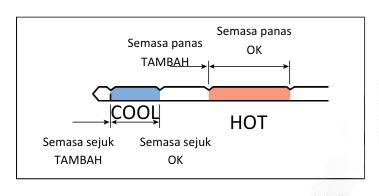
Engine oil lubricates, cools and cleans the engine. Check the oil level weekly with the dipstick, with the motorcycle held upright on level ground and the engine switched off for at least 3–5 minutes. Top up with the correct grade (typically SAE 10W-40 or 15W-50 for Malaysian tropical climate) when the level approaches the lower mark. Change the oil and oil filter according to the manufacturer's interval — commonly every 2,000–3,000 km for older motorcycles, or every 5,000–10,000 km for newer models.
Symptoms of oil problems: low power, knocking noises from the engine, high engine temperature, smoke from the exhaust. Do not ride with insufficient oil — it will seize the engine and cause loss of control.