Chapter 3 of 6 · KPP01 / KPP Gabungan · JPJ Malaysia · English
3. Defensive Driving Theory
3. Defensive Driving Theory
Chapter summary: This chapter explains defensive driving — driving that avoids accidents even when others make mistakes. It covers the five-step planning cycle (PMMMB), observation skills, identification of physical and moving hazards, and the MPKGA Driving Action Plan covering Information, Position, Speed, Gear and Acceleration.
Chapter summary: This chapter explains defensive driving — driving that avoids accidents even when others make mistakes. It covers the five-step planning cycle (PMMMB), observation skills, identification of physical and moving hazards, and the MPKGA Driving Action Plan covering Information, Position, Speed, Gear and Acceleration.
Defensive driving is the heart of being a safe driver. It means more than simply obeying the law — it means anticipating others' mistakes and acting early to avoid conflict. This chapter lays the foundation for all the practical skills in later chapters.
Defensive driving is the heart of being a safe driver. It means more than simply obeying the law — it means anticipating others' mistakes and acting early to avoid conflict. This chapter lays the foundation for all the practical skills in later chapters.
1.1. Introduction
【Indonesia】Introduction
a) Defensive driving means driving in a way that prevents and saves you from accidents even when the mistake originates from other road users.
a) Defensive driving means driving in a way that prevents and saves you from accidents even when the mistake originates from other road users.
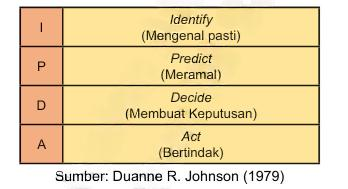
b) Practising the defensive-driving concept reduces the risk of injury, death, loss of time and money through the IPDA technique (Identify → Predict → Decide → Act) introduced by Duanne R. Johnson (1979).
b) Practising the defensive-driving concept reduces the risk of injury, death, loss of time and money through the IPDA technique (Identify → Predict → Decide → Act) introduced by Duanne R. Johnson (1979).
c) In conclusion, the concept of defensive driving refers to a framework of driving practice based on knowledge of traffic rules, advanced driving skills, a positive attitude and safe-routine habits, plus the ability to identify, evaluate and react to hazards caused by other road users or other traffic components.
c) In conclusion, the concept of defensive driving refers to a framework of driving practice based on knowledge of traffic rules, advanced driving skills, a positive attitude and safe-routine habits, plus the ability to identify, evaluate and react to hazards caused by other road users or other traffic components.
Road-safety values
Road-safety values
Defensive driving is not just a skill — it reflects your responsibility on the road.
Defensive driving is not just a skill — it reflects your responsibility on the road.
📌 Definition of defensive driving, its benefits and road-safety values.
📌 Definition of defensive driving, its benefits and road-safety values.
1.2. The 5-Step Driving Planning (PMMMB)
【Indonesia】5-Step Driving Planning (PMMMB)
P — Perception (Pemerhatian)
P — Perception (Pemerhatian)
Use sight, hearing and smell to obtain as much information about the situation as possible.
Use sight, hearing and smell to obtain as much information about the situation as possible.
M — Identify (Mengenal pasti)
M — Identify (Mengenal pasti)
Identify the hazards around you in their various forms.
Identify the hazards around you in their various forms.
M — Predict (Menjangka)
M — Predict (Menjangka)
Make predictions about the hazards and all possibilities so you can assess risk.
Make predictions about the hazards and all possibilities so you can assess risk.
M — Prioritise (Mengutamakan)
M — Prioritise (Mengutamakan)
Rank risks in order of importance / urgency before acting.
Rank risks in order of importance / urgency before acting.
B — Act (Bertindak)
B — Act (Bertindak)
Take the appropriate action. Consider all early possibilities that reduce risk for you and other road users.
Take the appropriate action. Consider all early possibilities that reduce risk for you and other road users.
📌 P.M.M.M.B — Perception, Identify, Predict, Prioritise, Act.
📌 P.M.M.M.B — Perception, Identify, Predict, Prioritise, Act.
🔒
🔒 Rest of this chapter is locked
Upgrade to Pro to unlock all sub-chapters, plus all 6 chapters / 55+ sub-chapters
4 chapters locked
3.3Improving Observation SkillsPro Only
3.4Identifying HazardsPro Only
3.5Prediction & PrioritisationPro Only
3.6Driving Action Plan (MPKGA)Pro Only